Domestic freight, from quote to proof of delivery.
TIO’s agents quote the load, book it when the customer accepts, follow it to delivery, and send the proof of delivery. Each action has its own setting, and anything outside your rules goes to a person. Your TMS stays the system of record.
- 01Quotereply in the thread
- 02Bookingorder and bill of lading
- 03Trackingupdates on real changes
- 04Proof of deliverysent when posted
Trucking and domestic freight: the work, one job at a time.

LTL Quote Agent
Reads the rate request, classes the freight, pulls live carrier rates, and replies in the customer’s thread.
- On its own
- Sends the quote when the price is under your ceiling
- Goes to a person
- A price over your ceiling, a freight class dispute, hazmat or oversize freight
- Status
- In production at a US trucking agency

Truckload Quote Agent
Builds the truckload request, asks for the truck cost, applies your margin rule, and sends the rate.
- On its own
- Builds and sends the request, and sends the rate when the cost comes back
- Goes to a person
- A lane or freight your rules do not cover
- Status
- In production at a US trucking agency

Booking
When the customer accepts a quote, creates the order, checks it against the request, and sends the bill of lading.
- On its own
- Books a quoted shipment the customer accepted
- Goes to a person
- A change to a booked order, and anything the request does not state
- Status
- In production at a US trucking agency

Tracking Agent
Follows each shipment, tells the customer when something real changes, and sends the proof of delivery.
- On its own
- Sends status and documents for a booked shipment
- Goes to a person
- A late pickup, a cancellation on or after pickup day, a date change in your TMS without your reply
- Status
- In production at a US trucking agency and a US import forwarder

Order Entry Agent
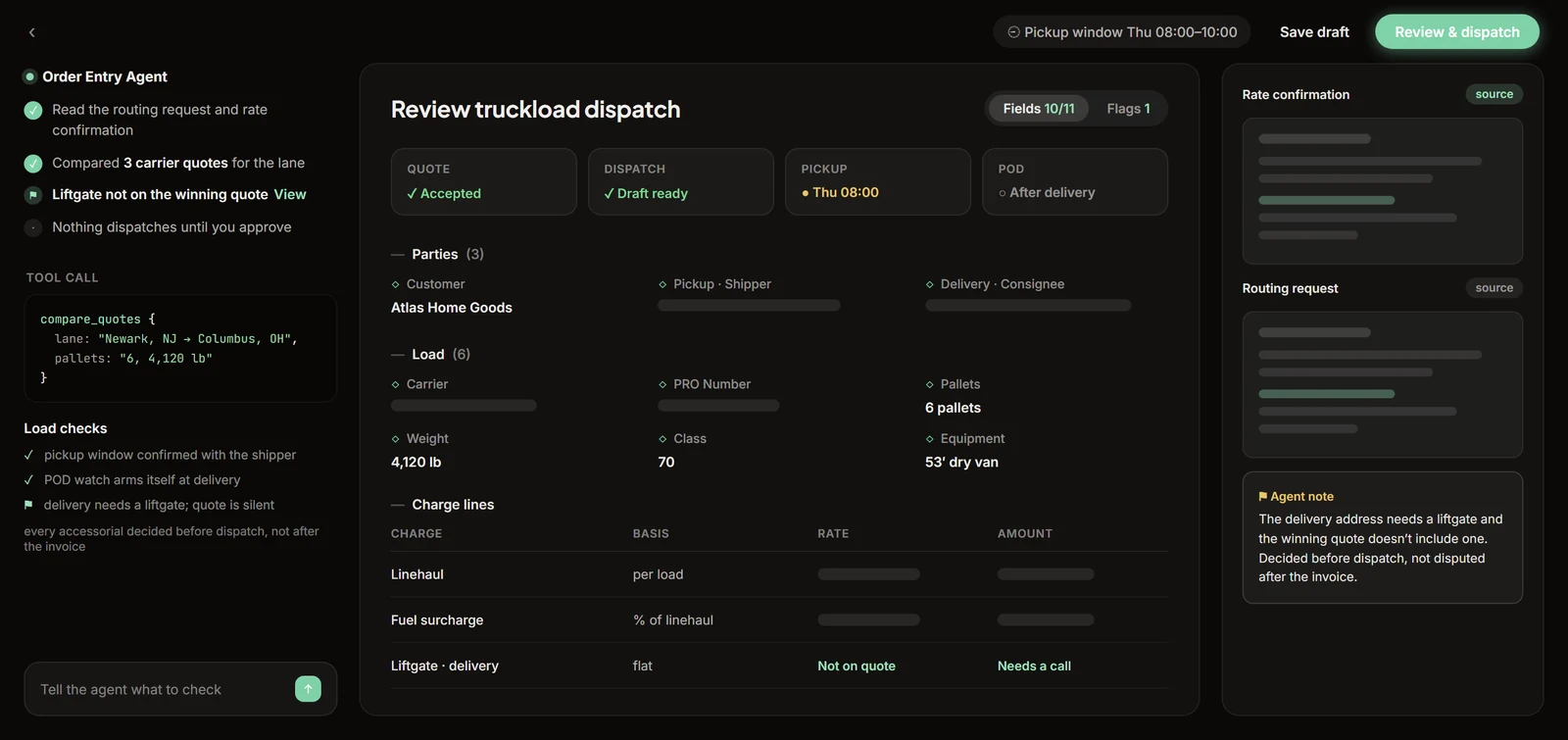
Reads the bills and the packing list and creates the lot or delivery order in your TMS, charge lines included.
- On its own
- Creates the record and sends it for review
- Goes to a person
- A party it cannot match, a document that contradicts another
- Status
- In production at a US import forwarder
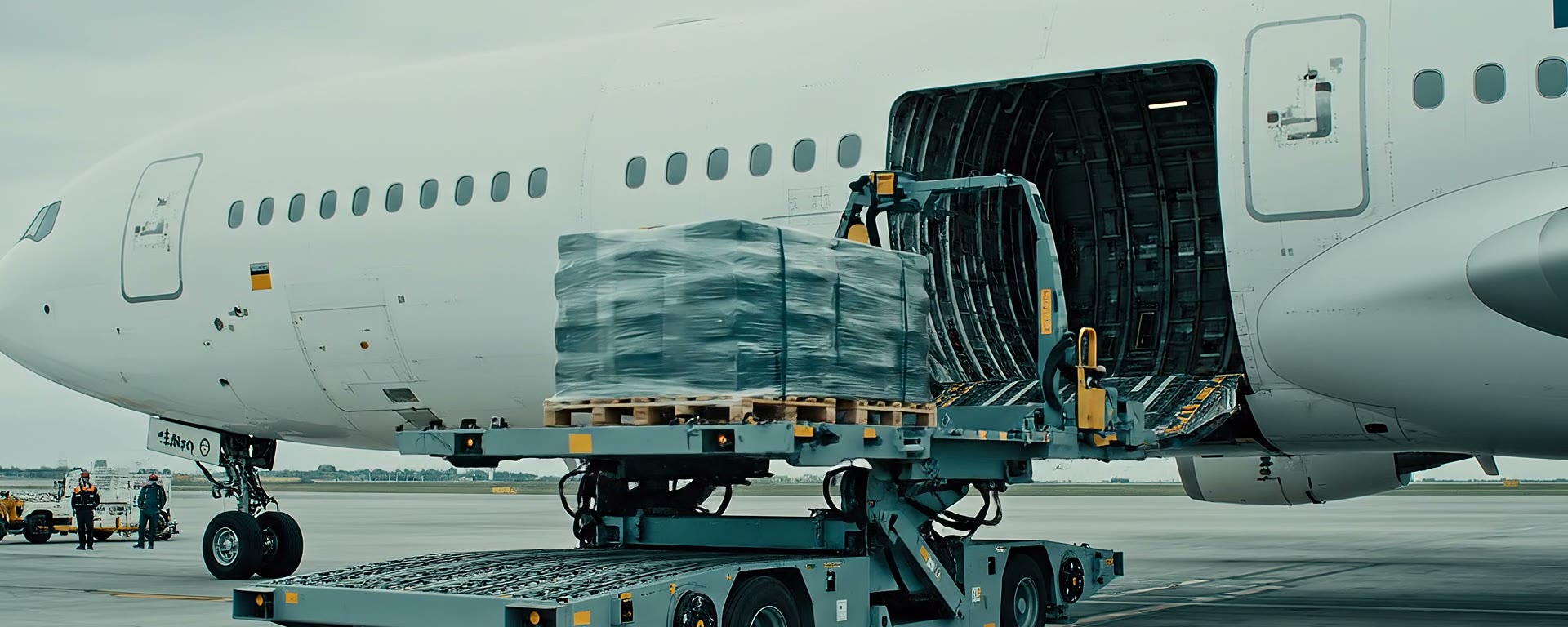
Example panels with sample steps on illustrative footage. Not a live feed.
Domestic looks simple until you count the relays.
A quote to compare, an appointment to hit, a status the customer keeps asking for, a POD nobody can find, and accessorials that quietly leak margin. Every stage is a different party waiting on a different answer, and each one lands in the same inbox. The load that gets forgotten is the one that eats the margin.
Quote it, book it, follow it to the POD.
Quotes
Reads the rate request and prices it from live carrier rates or the truck cost. A quote under your price ceiling goes out on its own. A price over your ceiling goes to a person.
Booking
When the customer accepts a quote, creates the order, checks it against the request, and sends the bill of lading. A change to a booked order goes to a person.
In-transit status
Follows each shipment and tells the customer when something real changes. A late pickup goes to your team first.
Delivery and POD
Sends the customer the proof of delivery when the carrier posts it.
Questions from your staff
Your team emails a question about a load and gets the status, the details, and the document back. It reads; it does not change an order.
Exceptions go to a person
A late pickup, a cancellation on or after pickup day, or freight your rules do not cover goes to your team with the facts already attached.
Each action has its own setting. It runs on its own, it is sent for review, or it waits for a person’s reply. The quote agents send a quote under your price ceiling on their own, and the booking agent books a quoted shipment the customer accepted. Anything outside your rules goes to a person.

Straight answers.
What does the agent do on a domestic load?
The agents work the load from quote to proof of delivery. The quote agents price the request and send the quote on their own when the price is under your ceiling. When the customer accepts, the booking agent creates the order and sends the bill of lading. The tracking agent follows the shipment and sends status and the proof of delivery. Anything outside your rules goes to a person. The reading and keying that takes an operator 15 to 30 minutes per load is staged in seconds.
Does the agent pick the carrier or dispatch the truck?
Each action has its own setting, and you choose it. The quote agents send a quote on their own when the price is under your ceiling, and the booking agent books a quoted shipment the customer accepted. A price over your ceiling, a change to a booked order, or freight your rules do not cover goes to a person with the facts already attached. TIO does not manage a carrier's fleet or dispatch drivers.
Carrier replies come back in every format. How does the agent read them?
For truckload, the agent builds the cost request, reads the answer when it comes back, applies your margin rule, and sends the customer the rate in the same thread. For LTL, it pulls live carrier rates. A lane or freight your rules do not cover goes to a person. Sorting a whole shared mailbox by which load each email belongs to is inbox triage, which is in pilot.
Does this replace our TMS or load board?
No. Your TMS stays the system of record, and however you source capacity today stays in place. TIO works through an adapter built for your TMS. Adapters are in production for two TMS platforms. For any other system, TIO first checks what it lets an agent read and write. The agent removes the step between the email and the record: at the US import forwarder running TIO in production, that keying across lanes was worth roughly 17.5 hours a week.
See it on a real domestic load.
Bring a real document and watch an agent take it to a finished draft while you’re on the call.
Book a demo